
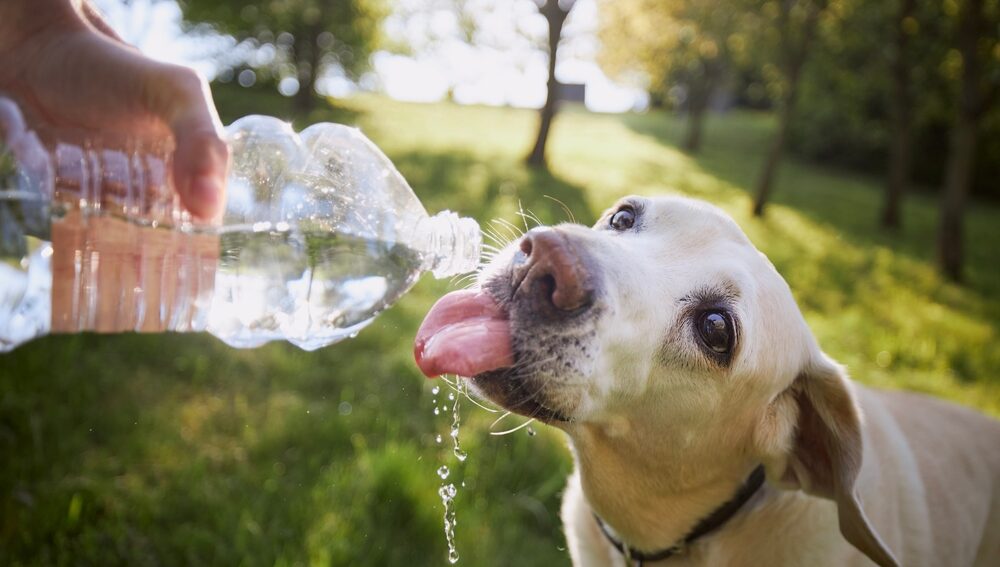
How Quickly Does an Overheated Dog or Cat Need to Be Cooled Down?
Cooling an overheated dog or cat has to start the moment you suspect heat stroke, ideally within the first few minutes, and it has to happen while someone else is calling an emergency hospital and getting the car ready. Once a pet’s internal temperature climbs past 104 degrees, the kidneys, liver, and blood clotting system start taking hits that compound the longer they stay hot. Run cool tap water (not ice) over the belly, armpits, and paws, then point a fan at the damp fur to pull heat off through evaporation. Stop active cooling around 103 degrees so your pet does not swing into hypothermia, and keep moving toward an ER even if your dog or cat looks better; internal damage shows up hours later on bloodwork.
At Harbor Pines Veterinary Center in Harbor City, we’d prefer to prevent heat scares before they start. We’re here to talk through the breed traits, health problems, or daily routines that make your pet a higher heat risk. Call us or request an appointment for a summer safety conversation so we can keep your dog or cat out of the emergency room. If you’re worried your pet is experiencing heatstroke right now, drive straight to the nearest 24-hour veterinary ER. After they’re stable, come in for a recheck so we can check their organ function and stay on top of any potential complications that are all-too-common after a heat emergency.
The Fast Facts
- Heatstroke is a true emergency, and the minutes between 104 and 106 degrees are when the kidneys, liver, and clotting system start to fail.
- Cool tap water on the belly, armpits, and paws plus a fan pulls heat off safely, while ice baths and wet towels left on top actually trap heat and make things worse.
- A pet who bounces back after cooling can still crash from delayed organ damage over the next one to three days, so a vet check matters even when your dog or cat looks fine.
- Most summer heat scares are preventable with cooler-hour walks, steady hydration, shade, and never leaving a pet in a parked car.
Which Red Flags Mean Your Pet Is Overheating Right Now?
Heatstroke usually announces itself well before a pet collapses, and the early signs are easy to miss if you are not looking for them. The first clues are behavioral: frantic panting that will not slow down, thick ropey drool, and a dog or cat who paces and cannot get comfortable. Catch it here and you have real time to act.
Once heat damage is setting in, they can slide into brick-red or pale gums, wobbling, and collapse within minutes. Gum color is one of the fastest checks you can do at home: healthy gums are bubblegum pink, while bright red or grayish-pale gums all signal trouble. Here is roughly how it escalates:
| Stage | What you might see |
| Mild / early | Excessive panting, restlessness, seeking cool spots, thick drool |
| Moderate | Bright red or brick-red gums, weakness, stumbling, vomiting or diarrhea |
| Severe | Pale or gray gums, collapse, disorientation, seizures, unresponsiveness |
If your pet has reached the moderate or severe column, skip the wait-and-see and start cooling while you head for emergency care.
In the First Few Minutes at Home, What Should You Do?
The goal in the first few minutes is to bring your pet’s temperature down steadily without overdoing it, all while someone arranges a vet visit. Move your pet out of the heat right away, wet the belly, armpits, and paws with cool tap water, and get air moving across the damp fur. Work through these steps in order:
- Get to a cooler spot: Move into shade or an air-conditioned room, and out of the sun and off hot pavement.
- Use water the right way: The first move at home is active cooling with cool tap water and airflow over the belly, armpits, and paws, not an ice bath and not a wet towel left draped on top, which traps heat instead of releasing it.
- Get air moving: Point a fan at the damp fur, or use the AC, so evaporation can pull heat off.
- Offer small sips: Let your pet drink small amounts of cool water if they want it, but never force water into their mouth.
- Do not overcool: Ease off once your pet perks up and stops panting hard, so you do not swing them into hypothermia.
Skip ice-cold water too, not just the ice bath: both can clamp down blood vessels near the skin and actually slow heat loss. Once cooling is underway, call ahead to the hospital you are driving to so a team is ready when you pull up. And even after your pet seems better, please call us right away or head straight to the nearest emergency hospital, because heatstroke can keep doing damage on the inside long after the outside looks normal.
What Happens at the Hospital When You Bring In an Overheated Pet?
The ER tackles heatstroke on three fronts at once. In the hospital, the three-tiered approach to heatstroke treatment layers controlled cooling, intravenous fluids to rebuild blood volume, and management of secondary complications, with the highest risk of death falling inside the first 24 hours.
Here is what each piece looks like in practice:
- Controlled cooling: The temperature comes down in a measured way, with continuous monitoring so it stops around 103 degrees rather than overshooting into hypothermia.
- Volume replacement: Intravenous fluids top the bloodstream back up, support blood pressure, and help protect the kidneys from the low-flow damage that heat causes.
- Managing complications: The team watches for and treats problems like abnormal clotting, organ stress, and low blood sugar as they appear.
That first-day risk is exactly why we push for a hospital visit even when a pet looks recovered. For an active crisis your fastest path is the nearest 24-hour ER. For the stable recovery care, bloodwork, and rechecks that follow a heat scare, you can reach our team to get your pet in.
Can Your Pet Look Fine After Cooling and Still Be at Risk?
Your pet can look completely fine an hour after cooling and still be at risk, because heat injures the body in ways that take time to surface. A pet who perks up can still face delayed organ damage after a heat event, with the kidneys, liver, heart, and gut faltering over the next one to three days.
Two big worries drive the follow-up window. The first is a body-wide inflammatory reaction, sometimes called SIRS, that can tip into shock. The second is a clotting failure: one of the most dangerous delayed complications is disseminated intravascular coagulation, a breakdown that leaves a pet both throwing abnormal clots and bleeding internally at the same time.
The reassuring part is that these problems are far more manageable when they are caught early. Running in-clinic bloodwork and diagnostic testing in the days after a heat event lets us track kidney values, liver enzymes, and clotting so we can act before a subtle change becomes a serious one.
What Puts Some Pets in Danger Long Before the Thermometer Climbs?
Dogs and cats cannot sweat the way we do. Their cool-down runs almost entirely through panting, with only a little help from paw-pad sweat glands, so a humid or still afternoon we would just call sticky can push a pet toward real danger. That single-channel cooling system is why heat sneaks up on so many families.
Some pets start the day at higher risk than others. Flat-faced breeds top the list, because their shortened airways make panting far less effective. For these pets, weight matters more; even an extra pound or two makes it harder to breathe and cool down. Beyond breed, a handful of traits stack the odds:
- Coat and breed conformation: Thick double coats and short muzzles trap heat and blunt panting, so Huskies, Bulldogs, Persians, and Boxers need extra watching.
- Age: Puppies and kittens have not fine-tuned their temperature control yet, and seniors regulate it less reliably than they once did.
- Body condition: Extra weight acts like insulation and makes the heart and lungs work harder to shed heat.
- Underlying health: Heart disease, breathing problems, and laryngeal issues all shrink a pet’s margin for error on a hot day.
Because every pet’s risk profile is a little different, heat plans should be too. If you are not sure where your dog or cat falls, our team can walk through coat, body condition, and heat-risk counseling at a routine visit and tailor a summer plan to your specific pet.
Simple Daily Habits That Keep the Heat From Winning
Most heat trouble is preventable, and the fixes are refreshingly low-tech. Day to day, hot-weather hydration and cooling aids come down to a portable water bottle, a chilled mat or damp towel, shaded rest breaks, and a fan during the hottest stretch of the afternoon. Watch for early panting and pause the outing before your pet is in trouble.
When Is It Actually Safe to Take a Pet Out for Exercise?
Timing and surface matter more than distance. Much of preventing heatstroke on hot days is scheduling: walk in the early morning or after sunset, dial back the intensity of play, and press the back of your hand to the pavement, because if it is too hot for your skin it will burn paw pads. On the hottest days, trade the long walk for a shorter one and cut play short the moment your pet slows down or lags behind.
The One Thing Never Worth the Two-Minute Errand
Leaving your pet in the car is never worth the errand, no matter how quick you plan to be. A parked car can hit 120 degrees within 20 minutes on an 85 degree day; hot vehicles take pets’ lives every summer, and a cracked window buys almost no protection.
California takes this seriously in both directions. State law makes it an offense to leave an animal unattended in a vehicle under conditions that endanger them, and California is also one of a minority of states that shields an ordinary bystander from liability for breaking into a car to save an animal in immediate danger. That protection is narrow and conditional, though: it depends on confirming the vehicle is locked, contacting law enforcement or animal control first, using no more force than necessary, and staying with the animal until help arrives. Calling first is not optional.
If your dog or cat was shut in a hot car and seems off, call for triage guidance right away or get to the nearest emergency hospital, since minutes count here.
Turning the House Into a Cool-Down Zone on Scorching Days
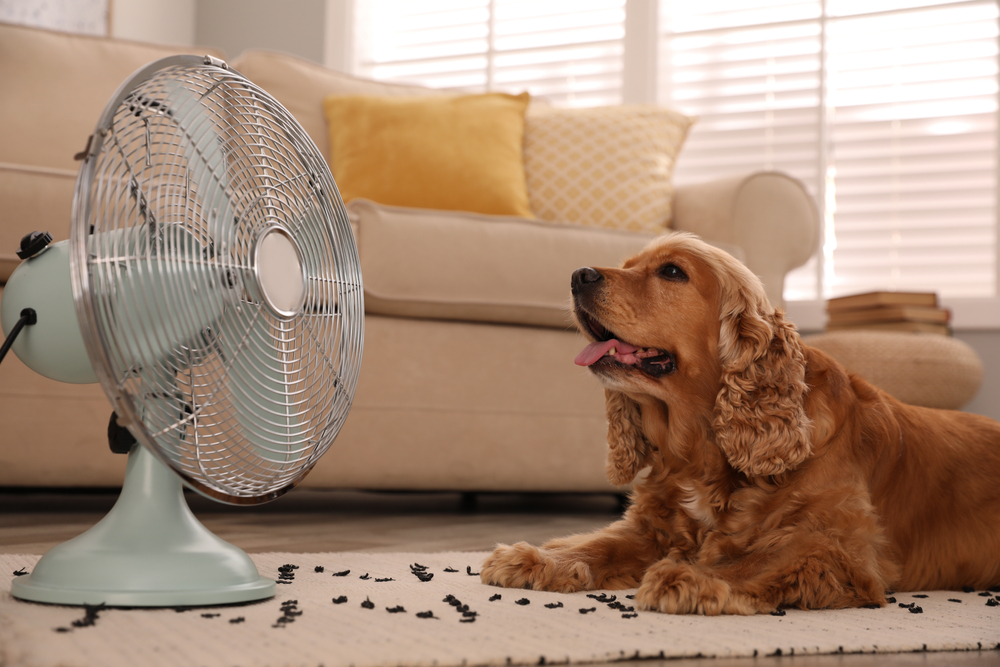
Indoors is your best defense during a heat wave, and comfort there is mostly airflow, cool surfaces, and gentle distraction. Run the AC or fans, leave access to cool tile, and keep a shaded resting spot. When it is too hot to head outside, low-key indoor games keep a bored pet busy without the running and wrestling that would send body temperature back up.
The trick on the hottest afternoons is to keep your pet entertained without getting them revved up, and slow-paced fun is the secret weapon. A frozen treat, a snuffle mat, or a cardboard puzzle feeder are easy DIY enrichment toys that give the brain a workout while the body stays cool. If your pet runs hot or has a breed or health trait that raises their risk, wellness exams are a good chance to build an activity and comfort plan tuned to them before the next heat wave rolls in.
Looking Out for the Cat Who Roams the Yard
Cats who roam the yard need heat planning too, and they are easy to overlook because they seem to manage on their own. Outdoor cat summer safety comes down to several shaded water stations refreshed through the day, a ventilated shelter out of direct sun, and a dependable way back into a cool room.
Set those water bowls in more than one protected spot so a napping cat is never far from a drink, and check the shelter through the afternoon to make sure it stays in the shade as the sun moves. Best of all, give your cat a reliable way back indoors so the yard is an option, not a trap, when the heat climbs.
Common Questions About Overheating Pets
What temperature is too hot to walk my dog?
There is no single magic number, but caution should climb fast once the air hits the mid-80s, and higher humidity makes any temperature riskier. Flat-faced breeds, seniors, puppies, and overweight pets have less margin and may struggle in weather other dogs shrug off. The pavement test is your friend: if the back of your hand cannot rest comfortably on the sidewalk for seven seconds, it is too hot for paws, so shift the walk to early morning or after sunset.
Can indoor pets get heatstroke?
Indoor pets can absolutely get heatstroke, because a home without air conditioning can climb into dangerous territory during a heat wave, especially in a sunny room or a space with poor airflow. Cats tucked into a hot sunroom and dogs left in a warm garage or laundry room are both at risk. Keep fans or AC running, make sure fresh water is always available, and give your pet a cool tile floor or shaded spot to retreat to when the house heats up.
My dog cooled down and seems fine now. Do I still need to see a vet?
Please do. Looking recovered on the outside does not mean the internal damage is over, and heatstroke can quietly injure the kidneys, liver, and clotting system for a day or more afterward. A short recovery exam with bloodwork lets us confirm those organs are holding up and catch any delayed trouble while it is still easy to treat. It is a small step that can prevent a much bigger scare.
Your Partner in a Cool, Carefree Summer
Heatstroke is a genuine emergency, but the flip side is encouraging: prevention and quick action save lives, and a few thoughtful routines keep the season fun instead of frightening. Learn the early signs, adjust walks and play to the weather, keep water flowing, and make indoor comfort easy on the hottest days.
A hot-weather safety plan built around your specific pet starts with a preventive care visit where we weigh their risks and coach you through them. Whenever you are ready, you can schedule a summer wellness visit to get that plan in place. If your pet is ever in a true heat crisis, skip the wait and head straight to the nearest 24-hour veterinary ER.